
Getting Creative in a Crisis
The headlines say it all. Energy price hikes and the overall cost of living is truly at a crisis point. Supply chain issues, the Ukraine war and rising raw material costs are all contributing to soaring food prices.
Kantar recently released data showing that grocery prices were 5.9% higher in April than a year ago, the biggest annual increase since December 2011. As consumers feel the pinch, brands and businesses are in the thick of it.
With the rising cost of raw materials and wage inflationary pressure, there is a real challenge for brands to continue making products attractive to customers as disposable income is shrinking. In order to tackle this, brands need to get creative with innovation and strategic partnerships.
The business of brand equity
The no-discount strategy has worked for some of the world’s biggest brands – Apple is a prime example. But it’s not the only element that builds a brand. A brand only carries equity if it delivers an extra value-add compared to its competitors and it takes time for shoppers to learn this.
However, brand equity can be gone in an instant – it’s estimated that it takes 0.05 seconds for a shopper to form an opinion about a brand’s website. Once brand equity is gone, it’s a long road to get back on track. So, plastering discounts all over a website could be one such way to undo all that good work.
We encourage businesses to explore ways to incentivize a purchase by increasing the value a customer receives.
How? We've been exploring different technologies to simplify this process:
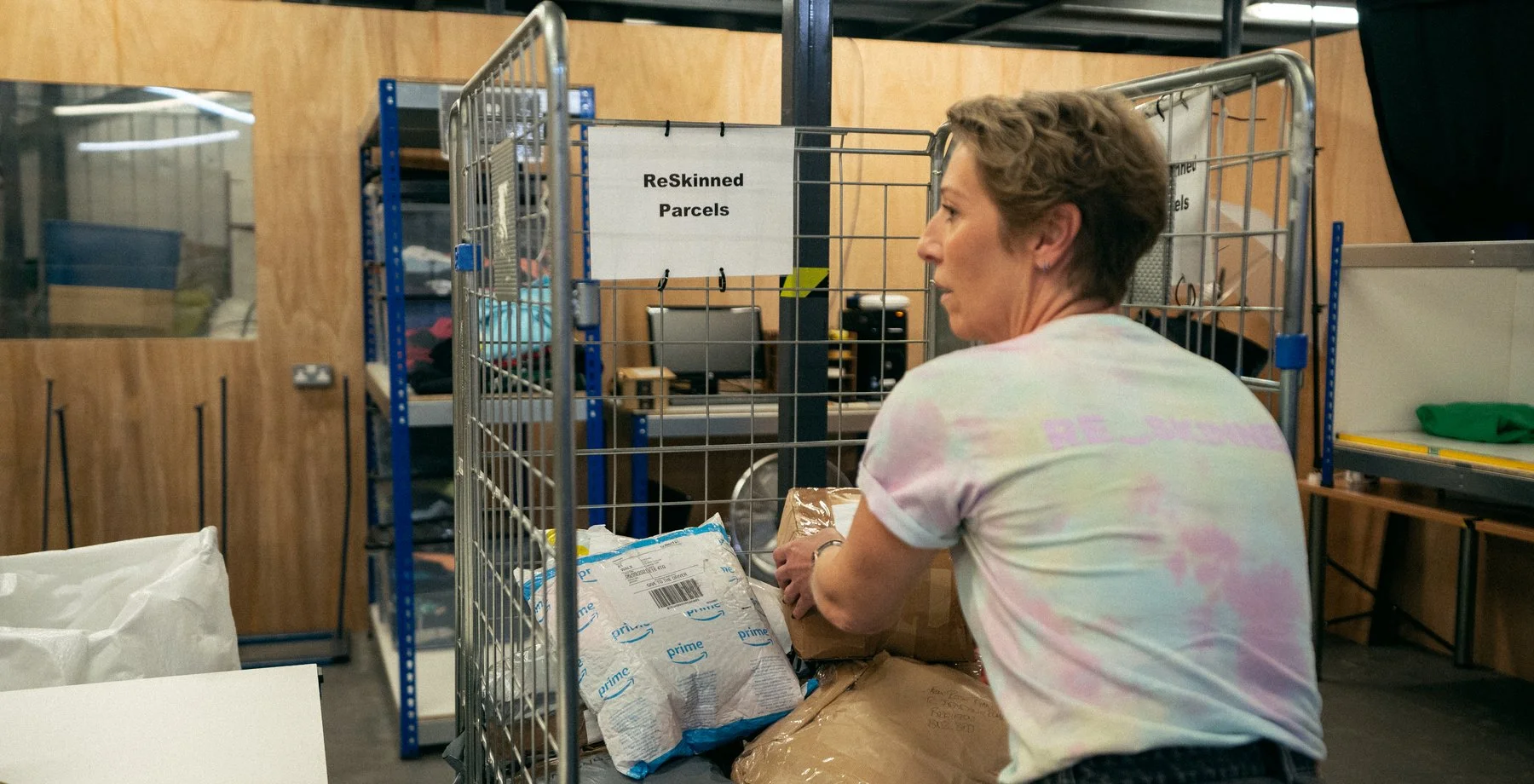
Reskinned provides a takeback scheme for fashion and apparel. Reskinned promises to reuse, recycle and repurpose 100% of what is sent to them – to help close the loop. Brands that partner with Reskinned can therefore offer their own products and brands at a potential discount without giving away brand equity. With consumers pushing businesses to be better, more purposeful and sustainable the offering of a repurposed pre-loved item will carry quite a bit of value for many customers.
Nibble is a smart on-site negotiation bot designed to increase sell-through at an overall higher level and avoid deep discounting at the end of a season. It still offers what some shoppers will be looking for – the thrill of a bargain. But it’s also achieved +50% in conversions by using the AI-driven tool.
ProQuo AI is taking a different approach to help businesses protect the bottom line as well as brand equity in this difficult economic landscape. ProQuo AI use overlay survey results and consumer data with AI to help businesses check in on brand sentiment and ensure that the creative decisions they’re making are resonating and building brand equity.
Giving sales a sporting chance
Sometimes discounting might be a necessary strategy – to shift end of line stock for example. However, tools such as the above examples can help avoid the erosion of brand equity.
Customers fall broadly into a few categories. The behaviour, motivation and likelihood of a conversion is different for a bargain hunter versus a loyal customer or a new customer, for example. Testing customer segmentation tools to help target discounting can be a great opportunity to protect brand equity.
As we review the 2022 calendar, there are changes afoot that will alter the promotion and discount landscape. For example, The EUFA World Cup – one of the world’s biggest sporting events is off-cycle this year – moving this prime promotional event into the golden quarter for retail. It also means that there are new opportunities to use as promotional hooks, such as the Womens’ Euros, which England is hosting.
These shifts mean on Black Friday this year the US and UK will have its World Cup football showdown. As an event that usually last year attracted £9.2 billion in consumer spend last year, the distraction of one of the biggest sporting events will have a considerable effect.
This is compounded by the recent shift away from BF sales, in support of sustainability. Purpose-led brands including hush and The Cotswold Company took a stand against the over-consumption prompted by heavy discounting with hush instead promising what would have been discounted spend to go to charity and The Cotswold Company stopped discounting and continued it’s mission to plant trees and give back.